
Plaimont – Against All Odds
Your industry is in crisis, you face destitution, and you fear for your family, for your future – what to do? For European winemakers facing ruin from phylloxera, frost or war one answer was to form a cooperative.
From the end of the nineteenth century through to the Great Depression of the 1930s cooperatives allowed small growers to pool equipment and expertise and make wine collectively. The sharing of risk and the equalisation of reward providing the financial stability necessary to survive.
Since then the image of the cooperative has been somewhat tarnished. Be it by collectivised grape growers in the Soviet east, operating under an edict of never mind the quality – read the scales. Or Mediterranean vineyards plundered for the production of bulk wine.

Today’s winemakers face the calamity of climate change. And it is a cooperative in a corner of south west France that gives us reason to hope.
The cooperatives of Plaisance, Aignan and Saint Mont sold their grapes for the production of Armagnac. A precarious business. In 1979, third generation wine maker André Dubosc, returned from Bordeaux with an idea. He persuaded the three cooperatives to combine their efforts in an enterprise dedicated to preserving the heritage and promoting the culture of their region. Rooted in the region but not parochial. The new enterprise would transform the image of Gascon wines by focussing on markets outside of France. An ambitious new cooperative was formed, Plaimont – Pl for Plaisance, Ai for Aignan and Mont for St Mont.

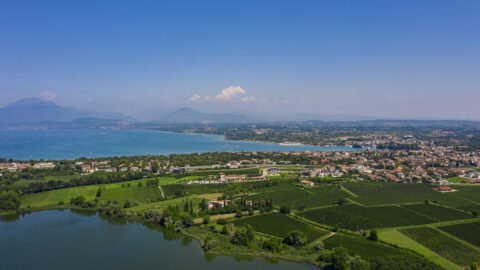
The Plaimont cooperative covers five appellations of Gascony and the Pyrenean foothills; the AOCs of Saint Mont, Madiran, Pacherenc du Vic-Bilh and Jurançon and the Côtes de Gascogne PGI. The climate in this part of south west France is heavily influenced by the Atlantic Ocean, which brings a welcome freshness to the wines.
The native grape varieties of the region thrive in this distinctive climate. Tannat is the principle grape of the red wines from the Madiran and Saint Mont AOCs, while Gros and Petit Manseng are key to the white wines from the Saint Mont and Pacherenc du Vic-Bilh AOCs.
In addition to these signature grapes, Plaimont is committed to cultivating other ancestral local grape varieties. The cooperative owns France’s largest private ampelographic conservatory, created in 2002 to protect ancient local grape varieties and lambrusques, or ‘wild vines’. Located in the village of Sarragachies the conservatory includes a 200-year-old pre-phylloxera vineyard, “Lieu-dit Ninan”, classified as an Historic Monument.
Old vines are treasured as part of a living heritage vital to the future of the cooperative. By embracing biodiversity and innovating through research, Plaimont has been able to reintroduce forgotten local grape varieties. Manseng Noir and Tardif are grape varieties suited to combating climate change and rising alcohol levels. Rediscovered in 2001 the naturally low alcohol, low tannin Tardif was finally allowed as a Saint Mont AOC permitted variety in 2024.

Olivier Bourdet-Pees, Diréctéur Generale Producteurs Plaimont, explains the Plaimont philosophy as, “adaptation is better than reaction. Technology may correct one problem only to cause another.”
This proactive approach is built upon sustainable practices. In the vineyard these practices include; phasing out synthetic pesticides, herbicides and fertilisers while encouraging cover crops, using preventive pruning to limit disease and monitoring unprotected test plots to detect diseases and pests early.
In the winery there is a focus on decarbonisation, water management, reduced energy consumption and recycling.
Plaimont launched, “Plaimont Demain” in 2020 to oversee its research and development initiatives and opened the, “Atelier des Cépages” experimental winery, in 2022. The winery serves as a laboratory where winemaking processes can be trialled in small quantities through micro and mini-vinifications.
From the beginning, Plaimont has also invested in restoring historic estates and châteaux. One of the most striking examples is the Monastery of Saint-Mont, restored in 2015. These historic buildings serve as vibrant event venues showcasing regional cultural. Another example of Plaimont looking to the past to secure the future.

Plaimont was born out of the belief that a small group of local people working together could change the destiny of a region. That belief persists in the support given to today’s aspiring winemakers. Encouraging the next generation of winemakers into the industry is a challenge for all wine regions. The work is hard and the financial rewards limited. Plaimont offers training, guidance and financial support to help young winemakers take over vineyards.
What started as a visionary project is today a remarkable success story. The Plaimont group manages 5,000ha of vines and around 450 growers contribute their grapes to a range of wines that generate €70m of turnover across 40 countries. They represent 98% of Saint Mont production, and around half of that of Cotes de Gascogne, Madiran and Pacherenc du Vic-Bilh.
But the true scale of their success isn’t measured in numbers. Their success is the demonstration that; a collaborative approach, a commitment to preserving endangered local grape varieties coupled with pioneering research is an effective response to the environmental and economic challenges facing the global wine industry.
In a backwater of rural France a pioneering group of winemakers went back to their roots to reignite regional pride. They have shown how an organisation built on ambition and clear values can transform a region. Plaimont is more than a cooperative, it is an example of progressive Patrimoine.
A Selection of Plaimont Wines
Les Vignes Retrouvées, Saint-Mont 2023 – Grape varieties: Gros Manseng, Petit Courbu, Arrufiac – 12.5% – Arrufiac adds a slight bitter grapefruit finish to this zesty white.
Projoe, Saint-Mont 2021 – Grape varieties: Gros Manseng, Petit Courbu – 12.5% – Peach and vanilla pod aromas. Richness and texture from Petit Courbu
Le Faîte Blanc, AOC Saint Mont 2021 – Grape varieties: Gros Manseng, Petit Courbu, Arrufiac – 13.5% – Small production from best 5 hectares of Saint Mont. Intense pineapple aromas and a long finish
Cépages D’auteurs, Saint-Mont 2024 – Grape varieties: Tannat, Tardif – 12.5% – Pronounced aromas of fresh red currents and a peppery palate lifted by the addition of Tardif.

Seigneurie de Crouseilles, Chateau de Crouseilles, Pacherenc du Vic-Bilh Sec 2019 – Grape varieties: Petit Manseng, Gros Manseng, Petit Courbu – 14% – Powerful, complex, beginning to show tertiary aromas of undergrowth and truffle.
Saint-Albert, Pacherenc du Vic-Bilh, 2022 – Grape varieties: Petit Manseng, Gros Manseng, Petit Courbu – 11.5% – Late harvest, fresh, balanced and elegant.
David Harker
March 2026
Tags: https://www.plaimont.com/en